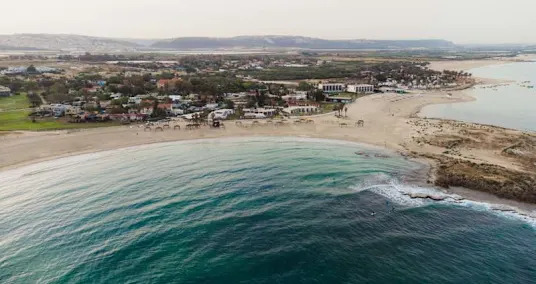
The discovery was made in an ancient shipwreck in the Dor Lagoon near the Carmel Coast, where archaeologists recovered nine pieces of unprocessed iron known as “blooms.”
Researchers from the University of Haifa said Wednesday that an underwater excavation off Israel’s northern Mediterranean coast uncovered what they described as the earliest known cargo of raw iron transported by ship, dating back around 2,600 years, Xinhua reported.
The discovery was made in an ancient shipwreck in the Dor Lagoon near the Carmel Coast, where archaeologists recovered nine pieces of unprocessed iron known as “blooms.” According to the university, the find provides direct evidence of how iron was transported in its earliest commercial stages.
The material was preserved in its original form, having solidified directly in a smelting furnace without undergoing forging or further refinement. Researchers said this distinguishes the cargo from later iron artifacts that typically show signs of shaping or tool-making.
Unlike copper and bronze, which could be melted into liquid form in ancient production processes, iron was heated with charcoal to produce a solid, porous mass. That mass was generally hammered to remove impurities and create denser material suitable for tools and implements.
The recovered blooms showed no indication of that secondary processing stage, suggesting they were transported immediately after production.

Earliest iron shipment discovered in ancient Mediterranean wreck
To determine the age and condition of the cargo, researchers conducted microscopic and chemical analyses.
Radiocarbon dating was also carried out on charred wood embedded in one of the pieces, helping confirm the timeline of the shipment. The findings were published in the journal Heritage Science.
Researchers said the cargo indicates that iron was being moved in raw form from production sites to other locations for further processing, pointing to a level of specialization in ancient manufacturing and trade networks in the Mediterranean.
The University of Haifa said the discovery provides new insight into early iron production and distribution practices in the region.
LATEST POSTS
- 1
 Astronauts beam home Christmas wishes from International Space Station: 'I think we may be orbiting a little higher than Santa' (video)
 - 2Some super-smart dogs can pick up new words just by eavesdropping
- 3EPA watchdog finds nation’s most contaminated sites are vulnerable to flooding, wildfires
- 4Steinmeier honours Italian 'guest workers' who rebuilt German economy
- 5Ever Wonder What An EV Motorcycle Water Crossing Would Be Like? Here You Go




- Vote in favor of Your Number one Cake Type
- Consumers advised to dispose of 19 cooking pans due to lead leaching risk, FDA reports
- Greenland’s melting ice and landslide-prone fjords make the oil and minerals Trump is eyeing dangerous to extract
- Colorado residents face earliest water restrictions ever — a harbinger of worse to come
- How to watch the 2025 Macy's Thanksgiving Day Parade for free
- Dominating the Remote Work Way of life: Individual Systems
- Smoking rate among US adults drops to record low as vape use rises, CDC report finds
- Survey: Canteen Cups With Great Warm Protection Impact
- Is 'Stranger Things' releasing one last episode? The 'Conformity Gate' fan theory explained as speculation mounts.